A Shopify store on a theme of your own: fast, on brand, without a pile of paid apps.
Checkout and order handling stay the Shopify you know, and the theme is built on your brand. We measure load time before and after launch, and the measurement sheet comes to you.
12+ projects delivered
every one on deadline, in production
Fixed price and deadline
in writing, and if we slip, the next payment waits
Reply within 24 hours
on working days, to every enquiry
In writingFixed quote after one call
A whole store to launch day, on a bespoke theme rather than a bought one.
What slows your store down
Every new requirement is another paid app, and the theme loads slower with each one.
The settings have run out, and support writes back that this theme cannot do it.
The mobile checkout is slow, and most of the started carts stop right there.
Which one is your situation?
You are opening a new store
A custom theme from scratch: collections, product pages and checkout, with your brand's own face.
The store outgrew its bought template
Template replaced: products and orders stay, and the theme is rebuilt on your brand.
Moving to Shopify from another platform
Migration: products, customers and order history brought over, with the old URLs redirected.
Your store is missing one piece
Work on the store you already run: a checkout integration, new collection pages, or the load time put right.
From product page to payment, your own providers
- 1The customer decides on the product page, so the filters and the product data follow your own categories.
- 2There is one route from the cart to payment, and it works on a phone.
- 3Payment and shipping run through your customers' usual providers, parcel lockers included.
- 4We leave the checkout alone: it stays Shopify’s, the most tested part of the store.
What a Shopify store build includes
- A custom Shopify theme, designed for your brand
- Load time and Core Web Vitals, measured
- A checkout that works through to the end on a phone
- Product upload and a collection structure with filters
- Search basics: titles, descriptions, product data
- Payments and shipping wired to the providers you use
Example
For a fashion brand with 400 products we would start with the collection structure, because that is what decides whether shoppers find anything: filtering by size and colour, collection pages with their own copy. The theme loads only the code a given page actually uses. Delivery options and invoicing sit inside the checkout rather than in a fourth app.
How the store ships, from theme to launch
- Call
We walk the catalogue
We look at how many products and variants there are, and how you take payment and ship. At the end we say if a theme would do.
- Scoping
A written proposal and a measured baseline
You get an itemised list of what goes into the theme and what stays an app. We measure today’s load time: that is the measurement sheet’s first column. That price holds to launch.
- Build
A bespoke theme over Shopify
Your store is built on its own theme and the checkout stays Shopify’s.
- Live
Launch, then measured again
After go-live we measure the load time again, and the finished measurement sheet comes to you.
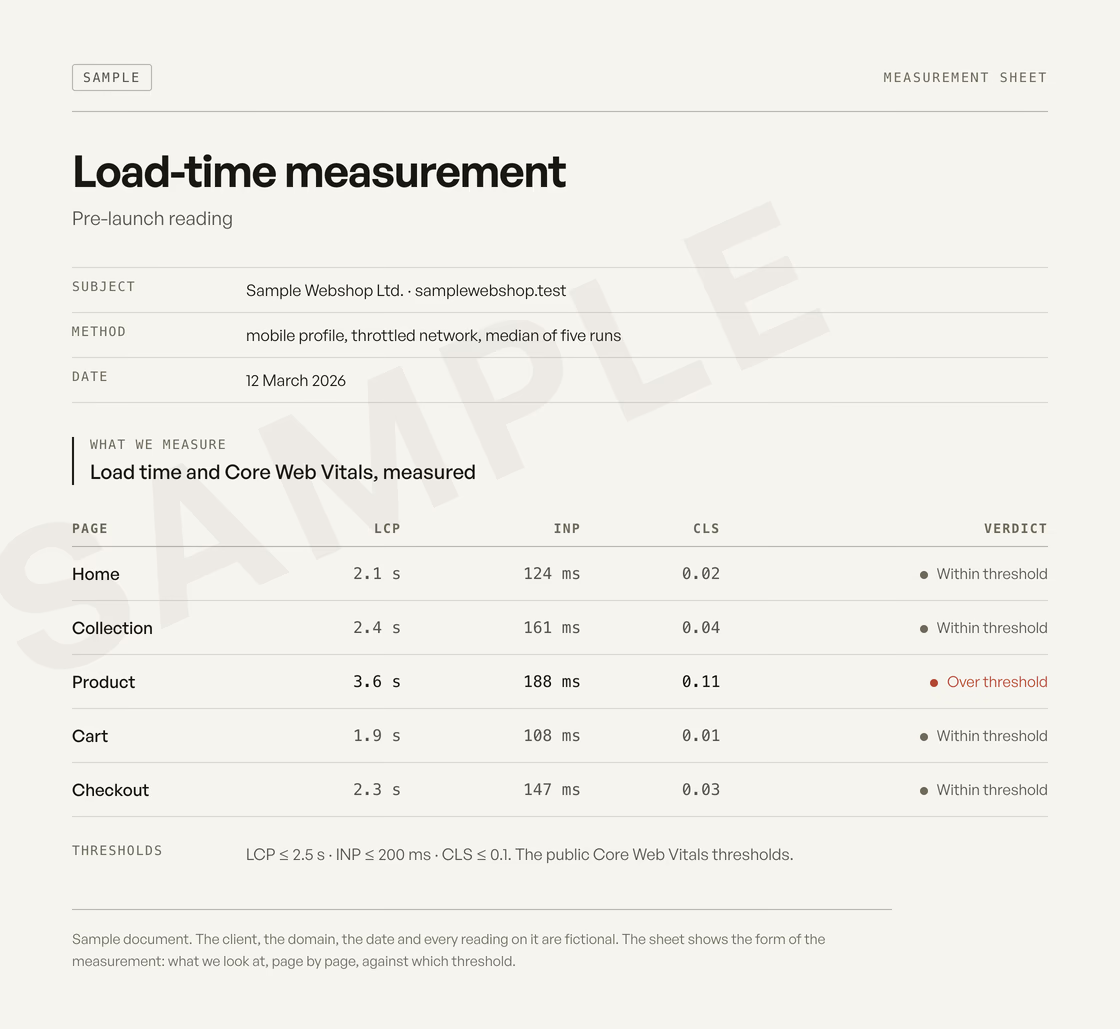
Every page's load time, before and after launch
Every page gets Google's three speed measures (Core Web Vitals) written down beside their thresholds, so you can see where the store stands and where work is left.
A sample measurement sheet. The client, the domain and every reading on it are fictional; the thresholds are the public Core Web Vitals thresholds.
Who a custom theme fits, and who not
This fits you if
- Your brand has a face of its own and the template does not carry it.
- The checkout has to reach your invoicing platform and the delivery options your customers expect.
- You send paid traffic to the store, so speed is money.
We would point you elsewhere if
- You have twenty products and a bought theme covers them.
- You run on a hosted store platform and nothing hurts except the monthly fee. Moving pays off once the theme or the checkout starts costing you sales.
- There is no traffic yet to measure. Product and ads first, custom theme after.
If you are introducing a company rather than selling products, that is website development.
Two Shopify themes we delivered
- Streetwear storeA custom theme for a fashion label. Its own collection pages, a bespoke footer, a brand page and a pre-drop “coming soon” state, all written into the theme, with no extra app.Custom theme · fashion
- Pet supplies storeA custom theme for a pet shop. An about card, a quote-over-image band and a review section built around the product page, in the store's own structure.Custom theme · pet supplies
70%
is the average share of started carts that never reach payment. A long, complicated checkout is among the most frequently named reasons.
Baymard Institute, a meta-analysis of 50 studies.
Companies we've built for
How we work
A custom Shopify theme from design to launch
- Clickable progress on a live link, stage by stage
- Fixed price and deadline in writing, and if we slip, the next payment waits
- The code and the infrastructure are yours
In writing
Fixed quote after one call
A whole store to launch day, on a bespoke theme rather than a bought one.
How many products and variants, and how do your customers pay and receive them? Migrating an existing store is a separate line.
Get a fixed-price quoteWhat happens after launch
A store lives in seasons: campaign traffic and the payment and shipping integrations are what ask for the most follow-up work.
First month
A clean handover, a watched launch
Source code, credentials and documentation in your hands, and we watch the first week with you, measurements included.
Every month
Maintenance that keeps it moving
Updates, fixes, extensions, and an eye on the measurements.
If something breaks
You write, we answer
A first reply within 24 hours on working days, to every enquiry.
Store cost, replatforming and app fees
The quote covers the custom theme, the collection structure, product setup and the payment and shipping integrations, at a figure agreed after the first call. Migrating an existing store, a second language and custom app development are separate items, each listed in the proposal. Whatever the quote says holds to the end of the project.
Yes, from WooCommerce, from a local platform or from another Shopify theme. Products, customers, order history and redirects from the old URLs are part of the work.
Yes. Products, prices, collections and copy live in the Shopify admin, and the theme is built from sections you move around in the editor. A developer is needed for a new section type or a new integration.
If you sell a handful of products and the look is secondary, a bought theme is enough, and we will say so on the first call. A custom theme pays off when the brand and the load time make you money: bought themes carry every feature any store might want, and your visitors pay for that in waiting.
At handover you get a maintenance quote of its own: we track Shopify's changes, fix what breaks and extend the theme when a new campaign or feature comes. The store and the theme live in your Shopify account, so everything runs without us too.
Fewer than with a template. What the theme can do, we build into the theme rather than renting it as an app subscription. What remains is what genuinely belongs in an app: invoicing, parcel lockers, newsletter. The quote lists what will run as an app and its monthly fee.
The domain and the URL structure stay. Where an address does change we put a 301 on it and keep the old list. Before the switch we record the current rankings, so afterwards there is something to measure against.
Start with your catalogue
Half an hour covers products, payment and shipping, then an itemised proposal says which apps can stay.
- 12+ projects deliveredevery one on deadline, in production
- Fixed price and deadlinein writing, and if we slip, the next payment waits
- Reply within 24 hourson working days, to every enquiry