Pricing and terms
Custom software pricing: one fixed figure per project, and what moves it.
Every service is quoted as one figure that holds to the end of the project, set after a scoping call.
Internal systems · Custom ERP development · Custom CRM development · Web application, subscription service · Mobile app
Fixed quote after scoping
Website · Online store · Landing page
Fixed quote after one call
AI automation (first process)
After the assessment
Software rescue and modernisation
Fixed quote after audit
Emergency website fix
After the diagnosis
Why this page names no figures. Your figure is named on the call and written into the proposal, where it holds until the project ships.
Fixed quote after one call
Fixed quote after one call
Fixed quote after one call
After the assessment
Fixed quote after audit
After the diagnosis
Fixed quote after scoping
Fixed quote after scoping
Fixed quote after scoping
Fixed quote after scoping
Fixed quote after scoping
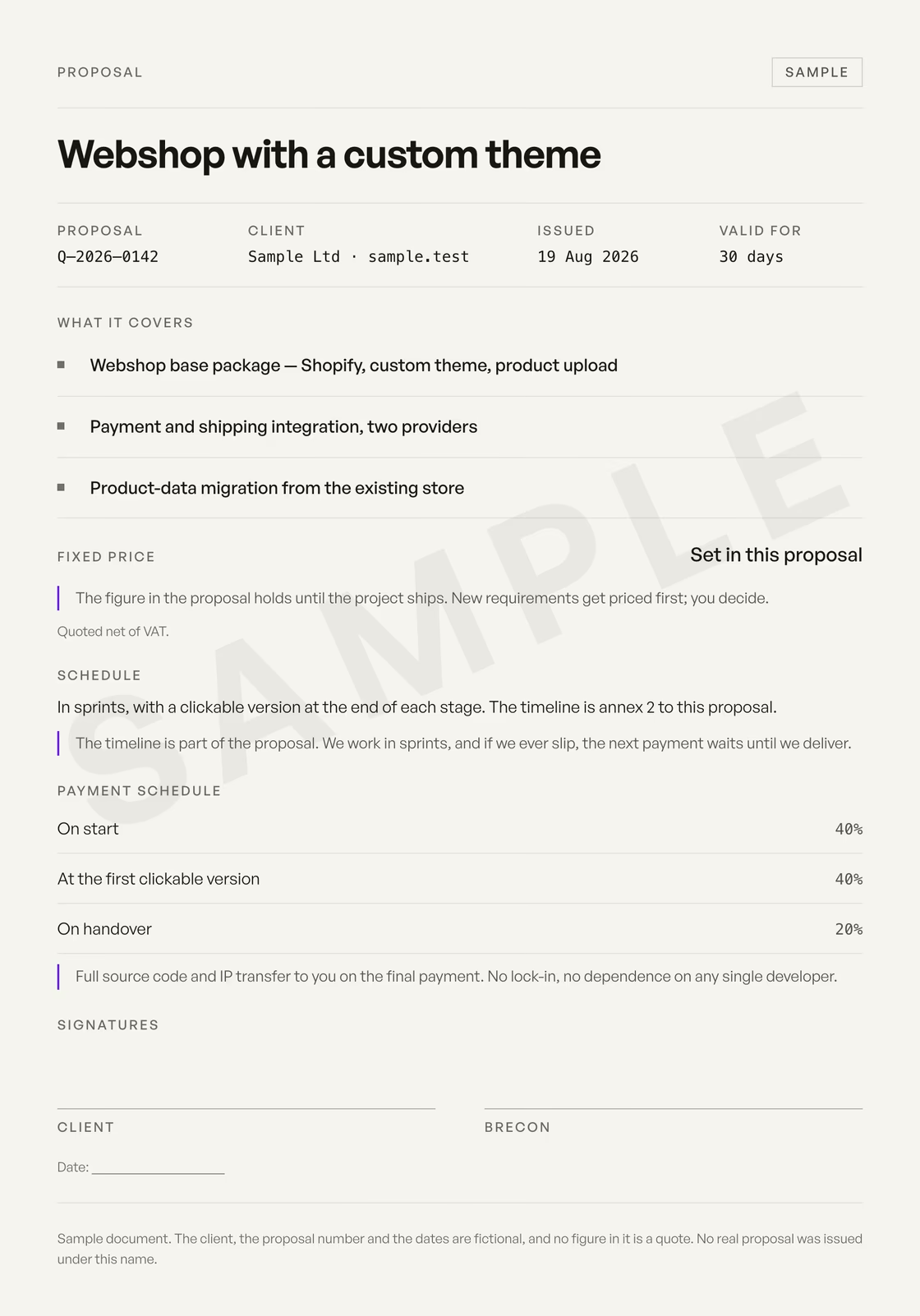
What the written proposal looks like
A sample with a fictional client and proposal number; the commitment rows are the real ones.
In every quote we send
A fixed price and a stated deadline, written into the quote.
An itemised scope: what we build, by when, for how much.
The full source code and every credential transfer to you on final payment.
Monthly maintenance after launch, with a stated response time.
What the price does not cover
Domain, hosting and running costs.
We tell you what it comes to, and it is in your name.
Third-party subscriptions.
The Shopify plan, App Store and Play developer fees and paid apps, itemised in the proposal.
Producing copy, photography and video.
Product data upload, on a store, is part of the package.
Ad spend and campaign management.
Migration from an existing system.
A separate line, because the state of the old data sets its price.
Against a precisely written scope we give you one number, and that number stands.
Questions about pricing
Further reading
The audit we run before we quote a half-built appAgainst a precisely written scope we give you one number, and that number stands. You know the final figure before the work starts. We suggest hourly work only where the task genuinely calls for it, such as ongoing extensions.
Because the scope on those rows varies more than a starting price can carry. On an internal system it is the number of processes and roles; on a rescue it is the state of the inherited code. A starting figure thrown at either would mislead in both directions. On those rows the scoping stage, or the code audit, produces the number, and from there it is fixed too.
The scope lives in writing and we guard it together. When a new requirement appears, we price it first, in time and money, and you decide. No silent scope drift in either direction, and no surprise invoice.
A standalone n8n or Make workflow does cost a fraction, and if all you need is data moved between two systems, it is worth it. We come in where the process touches your email, invoicing or internal systems, needs error handling, logging and human approval, and someone has to answer for it in production. Measurement and maintenance are in the price, and if the off-the-shelf workflow serves your goal, we say so on the call.
A single freelancer is a single point of failure: sick, ghosted or overbooked, and your project stalls with no backup. A template starts cheap and the bill arrives later: lost orders on a page that brings no enquiries, and a rebuild a year on. We come with a written proposal, milestone payments and a second person who can pick up the thread.
Whoever scopes your project builds it, and hands it over: about the studio
The proposal states the traffic and data volume we design for, and the system is built so the next order of magnitude is served by extending it.
In stages: a deposit at kickoff, the rest tied to milestones. You always pay for work that exists and that you have already seen on the preview link.
A monthly maintenance plan: security updates, fixes, small changes, support with a set response time. Its price is fixed in the proposal up front.
There are three. The free AI audit reads your public pages and tells you what your company is ready for today: a short read, not a deep audit. The company AI audit goes deeper, assesses your processes, and carries a price of its own. The code audit takes a few days, is a stage of its own with its own fixed price, and ends in a written repair plan that stays with you: yours whether or not we do the repair.
Get a real number for your project.
30 minutes, and you have a real number, or hear that less will do.